Picture two SaaS founders with the same idea.
The first spends three months writing specs, hiring developers and building every feature on the wishlist. By launch day the budget is gone, and the first real users ignore half of what was built.
The second spends a week sorting through customer conversations with AI, a few days building a clickable prototype, and two weeks testing it with real buyers. Six weeks in, she knows exactly what to build, and she hasn't written a single line of production code yet.
Same idea. Same market. Very different odds.
That gap is what AI is doing to SaaS product management. It hasn't replaced the product manager. It has removed the waiting. Research that took weeks now takes an afternoon. Prototypes that needed a full team take a day. And the question every founder loses sleep over, "What should we build first?", finally gets answered with evidence instead of gut feel.
At IPRS Consultants, we help founders and startup tech companies with MVP development and custom software development every day. Here's what we're seeing change, and how you can use it without falling into the traps.
1. Discovery: stop guessing what customers want
Be honest: when did your team last read every support ticket from the past month?
Most SaaS companies sit on a goldmine of customer evidence they never touch: support tickets, sales call notes, app store reviews, churn surveys and chat logs. Nobody has time to read it all, so roadmap decisions fall back on whoever spoke to a customer most recently.
AI changes the math. Language models can read thousands of conversations and sort them into themes in minutes: the feature people keep begging for, the screen where trials stall, the competitor they mention right before they cancel. A product manager can now ask in plain English, "Why don't trial users convert?" and get an answer backed by real customer quotes.
The shift: discovery stops being a one-off phase before the build. It becomes a weekly habit, and you walk into every planning meeting holding evidence instead of opinions.
2. MVP development: build less, learn faster
Here's a truth many founders learn the expensive way: an MVP isn't a small version of your product. It's the fastest way to find out whether anyone will pay for it.
AI makes that learning loop far cheaper:
- Prototypes in hours, not weeks. AI design and code tools turn a written idea into a working, clickable prototype the same day. Put it in front of ten potential customers before you commit any budget to development.
- Smaller, sharper first builds. When testing ideas is cheap, you stop guessing which features matter. Only the features that survive real user feedback make it into the MVP. The rest go on the "later" list.
- Faster engineering. AI coding assistants help developers with boilerplate, tests and documentation, so more of your budget goes into the features that make your product different.
For a startup on limited runway, a shorter path from idea to first paying customer can be the difference between raising your next round and closing shop.
Curious what a lean, AI-assisted build looks like in practice? See how IPRS approaches MVP development for SaaS founders.
Explore MVP development for SaaS founders →
But here's the catch. A prototype that looks finished is not a product that's ready. Think of it like a show home: perfect for walking buyers through, but you wouldn't let a family move in before the wiring and plumbing pass inspection. AI-generated code still needs solid architecture, security review and proper testing before real customers depend on it. Speed at the prototype stage is a gift. Shortcuts at the production stage become technical debt, and that debt always collects interest.
3. Roadmaps that listen to data, not volume
Ever sat through a roadmap meeting won by whoever argued loudest? AI-assisted analytics are quietly ending that.
Modern product analytics tools can flag which features drive retention, spot accounts showing early signs of churn, and estimate the likely impact of a change before you build it. Instead of a rigid twelve-month plan that's out of date by March, SaaS teams can run a living roadmap that adjusts as usage data rolls in.
The product manager's role moves from "decide everything" to "ask sharper questions and make the final call." AI shows you the patterns. You still choose which bets fit your strategy.
4. Software development teams work differently now
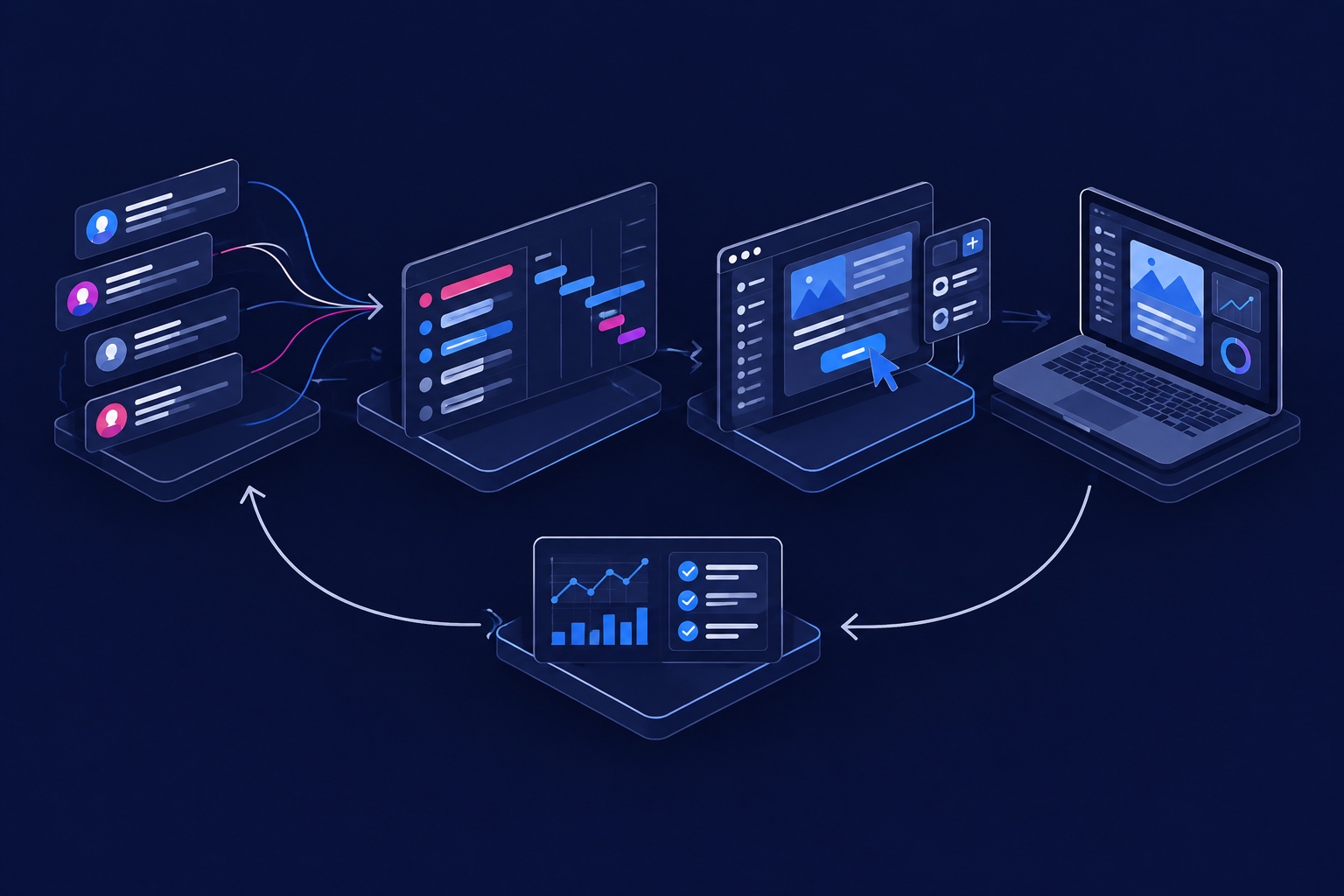
AI isn't only changing how code gets written. It's reshaping the whole software development lifecycle:
- Planning: product managers draft user stories and acceptance criteria with AI, then refine them with the team. Less typing, more thinking.
- Building: developers lean on AI for routine code, refactoring and first-pass code review.
- Testing: AI helps generate test cases and surface the edge cases humans tend to miss.
- Launching: release notes, help articles and onboarding emails can be drafted the moment a feature launches.
Every handoff between product, design and engineering gets shorter. A small, focused team can now deliver what used to need a much larger one, which is exactly why lean startup tech companies are adopting these workflows first.
5. Your customers now expect AI inside the product
While AI changes how SaaS products are built, it's also changing what customers expect to find in them. Smart search, automatic summaries, assistants that handle the busywork: these are quickly moving from "nice surprise" to "why doesn't yours do that?"
That puts a new set of questions on every product manager's desk:
- Does this AI feature solve a real customer problem, or are we just following a trend?
- How do we handle accuracy, privacy and customer data responsibly?
- What does each AI feature cost to run per user, and does our pricing cover it?
Answer these at the MVP stage and you avoid painful, expensive rebuilds later.
6. What AI still can't do for you
It's easy to get swept up in the hype, so let's be clear about where people still matter most:
- Strategy. AI can summarize a market. It can't decide which market you should fight to win.
- Empathy. Reading a summary of interviews isn't the same as hearing a frustrated customer describe their worst Monday.
- Trade-offs. Speed or quality? Growth or profit? One big client or a hundred small ones? These calls belong to your team.
- Accountability. When something breaks, customers want a human who owns the fix.
The best SaaS teams don't use AI to think less. They use it to spend more of their time on the thinking that matters.
Your 30-day starting plan
You don't need a big budget or an in-house AI team to start. Try this over the next month:
- Mine what you already have. Feed last quarter's support tickets and sales notes into an AI tool and pull out the top three recurring problems.
- Prototype before you build. Turn your strongest idea into a clickable prototype and test it with at least five real users.
- Cut your MVP to the bone. Keep only the features users tested and asked for. Everything else waits.
- Pick a development partner who uses AI responsibly. Speed matters, but only with strong architecture, security and testing behind it.
- Measure from day one. Set up product analytics before launch, so every release teaches you something new.
Proof, not promises: products IPRS has built
Everything in this article comes from hands-on work. The IPRS team has designed and delivered SaaS products across very different industries, each one starting the same way: a focused MVP, tested with real users, then grown into a full platform.
- CRM: a customer relationship management platform that brings leads, deals and client communication into one place, so sales teams stop living in spreadsheets.
- OSH: an occupational safety and health application that helps organizations record incidents, run inspections and stay on top of compliance.
- CHHM: a purpose-built platform designed around its users' day-to-day workflows, delivered as a lean first release and expanded as feedback came in.
- GHG: a greenhouse gas tracking solution that helps businesses measure and report emissions, a growing need as sustainability reporting becomes standard.
Different industries, same lesson: the products that succeed are the ones that start small, learn fast and build on real evidence. That is the approach we bring to every MVP development project.
Build your AI-ready MVP with IPRS Consultants
IPRS Consultants Pakistan helps founders and SaaS teams turn ideas into products customers actually pay for. We pair AI-assisted workflows with experienced engineers, so you get the speed of modern tools and the reliability of proper software development.
Whether you're validating your first idea or scaling a product that's already live, we can help you:
- Shape a big idea into a focused, testable MVP
- Prototype and validate with real users before you commit your budget
- Build secure, scalable SaaS software that grows with you
- Add AI features that solve real customer problems, not just tick a box
Got an idea you're itching to test? Book a free MVP strategy call with IPRS Consultants and walk away with a clear plan for what to build first.
Before using AI for customer research, remove personal and confidential information and check your provider’s data handling settings. Only use customer data you are authorized to process.
Frequently asked questions
Will AI replace product managers?
No. AI takes over research summaries, documentation and routine analysis, which frees product managers to spend more time on strategy, customers and decisions.
How does AI speed up MVP development?
It shortens discovery, makes prototyping fast and cheap, and helps developers write and test code faster. Startups reach real users sooner, with a smaller and smarter first build.
Is AI-generated code safe for production?
Only after review. AI-assisted code needs the same architecture, security and testing standards as any other code before it goes live.
Can a small startup afford to use AI in product development?
Yes. Many AI tools are low-cost or free to start, and the time they save usually outweighs the cost. The right development partner can help you choose the tools that fit your product.